

Research Overview
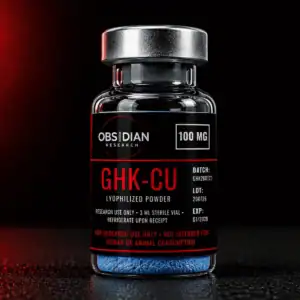
GHK-CU (Copper Tripeptide-1) is an investigational copper-binding peptide compound that has generated significant scientific interest due to its unique molecular structure and its study within cellular signaling, peptide biology, and molecular research. Research involving GHK-CU has focused on understanding its interactions with copper ions, peptide pathways, and biological communication mechanisms within controlled laboratory environments.
As a naturally occurring tripeptide complexed with copper ions, GHK-CU represents an important area of peptide research involving molecular signaling, extracellular matrix studies, and cellular response mechanisms.
Areas of Research Interest Include:
- Copper-binding peptide research
- Cellular signaling pathways
- Extracellular matrix research
- Peptide structure and function analysis
- Molecular communication studies
Scientific Background
GHK-CU consists of the naturally occurring tripeptide sequence glycine, L-histidine, and L-lysine complexed with a copper ion. This unique molecular structure has made GHK-CU a subject of investigation within peptide Research-Focused on copper-dependent biological pathways and cellular signaling mechanisms.
Laboratory studies continue to examine GHK-CU’s molecular properties, copper-binding characteristics, peptide stability, and interactions within cellular research models. Investigations involving copper peptides contribute to a broader understanding of peptide chemistry, molecular communication, and biological research pathways.
Molecular Information
Molecular Formula: C14H24CuN6O4
Molecular Weight: 401.9 g/mol
Research Use Only
Products offered by Obsidian Research are intended solely for laboratory research purposes. These products are not intended for human or veterinary consumption and are not approved for clinical use.
Expand Your Laboratory Knowledge
Explore foundational resources relevant to GHK-CU (Copper Tripeptide-1) and Cosmetic Research.
Understanding Peptide Nomenclature: What Do Names Like GHK-Cu and BPC-157 Mean?
Read Article →
Understanding Amino Acid Sequences in Research Compounds
Read Article →
Understanding Peptide Chain Length: From Dipeptides to Polypeptides
Read Article →
Cosmetic Research
Explore complementary research materials organized around this area of laboratory investigation.